Centrifugal Fan
Proventofan manufactures AC, DC and EC centrifugal fans from 133mm to 560mm for HVAC systems, clean rooms, industrial ventilation and OEM supply. Three motor technologies, one factory.
Send frame size, voltage, airflow and quantity — engineering review within 1 business day.

Before You Spec a Centrifugal Fan, Check These Three Things
Most early fan failures don’t start with the motor. They start with a missed operating condition: the wrong ambient temperature assumption, the wrong problem being solved, or a performance window that was never actually matched against the replacement.
-
Cause
A standard plastic-frame centrifugal fan tests fine at 25°C on the bench. Installed next to a transformer running at a sustained 70°C, the frame material creeps and the impeller drifts out of balance over months, not days.
-
✓ Solution
Sustained high-ambient applications need the frame material spec’d for the actual operating temperature, since bench testing at 25°C doesn’t predict frame performance at 70°C. Metal-frame options exist for exactly this reason, but they have to be requested; they aren’t the default. Skip this check at the spec stage and the failure shows up months into the field, not on an incoming inspection report, which makes it a harder and more expensive problem to trace back to a decision that took one extra question to get right.
-
Proof
“Sustained high ambient temperature ages the material — frames distort, impellers creep out of balance, and the fan that tested fine at 25°C fails early at 70°C next to a transformer.”— long-term OEM customer, high-temperature application review, 2024.
-
Problem
Low airflow request, real noise problem
What Caused ItA request for lower airflow sometimes turns out to be a noise or airflow-pattern requirement wearing a disguise. Worth confirming which one you’re actually solving for before locking a spec. Chase the wrong variable and it’s possible to spend weeks adjusting airflow that never touches the noise complaint driving the request in the first place.
What to ask before RFQIs the complaint about loudness, or about airflow hitting somewhere it shouldn’t?
-
Problem
Match the performance window, not just the frame size
What Caused ItTwo fans in the same frame size can have different real-world performance windows. Engineering replacement evaluations that align on CFM, RPM and power draw, rather than frame dimensions alone, pass review faster. Match on frame size alone and the risk is a fan that fits the enclosure but doesn’t hit the CFM or static pressure the original system was designed around, which surfaces later as an underperforming system, not as a wrong-size part.
What to ask before RFQWhat are the original unit’s CFM, RPM and power draw, not just its frame dimensions?
How a Centrifugal Fan Works
Axial fans push air straight through along the shaft. Centrifugal fans work differently: they turn airflow 90°, spin it outward through the impeller, and build real static pressure. That’s what ducted systems, filters and long air runs actually need.
Motor Drive
The motor energizes. The stator generates a rotating magnetic field that drives the rotor and impeller up to operating speed.
Air Intake
As the impeller spins, a low-pressure zone forms at its center. Air is drawn in through the inlet and pulled into the impeller eye.
Centrifugal Acceleration
Air picks up speed along the blades and is pushed outward by centrifugal force. Velocity and pressure both increase toward the blade tips.
Air Discharge
High-speed air enters the volute casing. The scroll widens as it curves around, slowing the airflow and converting velocity into static pressure. That pressure is what drives air through your ductwork.

Centrifugal Fan or Axial Fan?
Centrifugal fans redirect airflow 90° and build high static pressure, making them the right call for ducted systems, filtration and long duct runs. Axial fans move more air at low resistance in a smaller footprint, which suits open spaces and short runs better. If your system has ductwork, bends or filters, centrifugal is almost always the answer.
For the full comparison, including a static-pressure decision framework and real project examples, see Centrifugal Fan vs Axial Fan: Complete Selection Guide →
Where Centrifugal Fans Are Used
High static pressure and 90° airflow redirection make centrifugal fans the right choice for ducted systems, filtration and industrial extraction. Here’s where Proventofan fans are specified most often, and which product line typically fits.
-

HVAC Systems
Air handling units, fan coil units and rooftop plant need static pressure to push air through filters, bends and long duct runs, a core use case for centrifugal fan for HVAC applications. Fixed-speed AC covers most standard installations; EC becomes the better fit once variable air volume control or BMS integration enters the spec.
AC for standard fixed-speed AHU; EC where variable air volume or BMS integration is required.
Full HVAC selection guide → -

Clean Room & Laboratory
HEPA and ULPA filtration systems, laminar flow cabinets and fan filter units push back against tight, particulate-controlled ducting, where control precision matters as much as raw airflow. EC is often the starting point where precise control and low noise matter, since 0–10V/PWM/Modbus control lets airflow be tuned to the filtration stage instead of running at a single fixed speed.
EC (0–10V/PWM/Modbus control for filtration-stage precision).
⚠ Send for engineering review if: the filtration stage requires ISO Class 5 or tighter, or airflow needs to track a variable fan filter unit load.
Full fan filter unit guide → -

Industrial Ventilation
Factory air changes, welding fume removal, spray booth exhaust and grinding dust control all push particulate-loaded or corrosive air through the fan, and that load is what drives the spec here. AC remains the standard choice where duty cycles run continuous but control requirements stay simple; metal impeller options handle the abrasive load.
AC for standard duty; metal-impeller variant for abrasive/high-temperature air streams.
⚠ Send for engineering review if: air temperature or corrosive gas exposure falls outside standard impeller material tolerance.
-

Dust Collection
Woodworking, cement processing, metalworking and pharmaceutical dust extraction rely on centrifugal fans for dust collection to drive air through bag and cyclone systems. Cyclone systems in particular need the higher static-pressure frame sizes to keep separation efficiency from dropping as duct runs get longer.
AC or DC depending on system voltage; higher static-pressure frame sizes for cyclone systems.
Full dust collection fan guide → -

Data Center Cooling
Server room pressurization, UPS room ventilation and transformer cooling all need airflow that tracks a variable heat load rather than run at one fixed rate; a fixed-speed fan struggles to keep up with that kind of swing. EC is commonly considered when BMS integration or variable-speed control is required, since Modbus-enabled units can tie directly into the building’s monitoring system instead of running on a separate control loop.
EC (BMS integration, variable-speed control).
⚠ Send for engineering review if: the room’s heat load profile changes often enough that a fixed airflow setting would leave capacity unused most of the time.
-

Parking & Tunnel Ventilation
Underground car park CO extraction and tunnel air pressurization push against the resistance of a large enclosed volume, so sizing here is driven by air-change-rate calculations specific to that volume rather than a general ventilation rule of thumb. High-volume centrifugal fans keep CO levels within safe limits once sized correctly.
AC or DC, sized to volume and static-pressure requirement.
⚠ Send for engineering review if: the enclosed volume, occupancy pattern or local fire code calls for a specific air-change-rate calculation rather than a standard sizing assumption.
Choose a Centrifugal Fan by Impeller Design
Five impeller geometries, each suited to a different combination of airflow, pressure and environment. Use this quick comparison to narrow down which type fits your application, then follow the link to its dedicated guide for the full engineering detail.


| Impeller Type | Airflow / Pressure Tendency | Air Cleanliness Tolerance | Typical Application | Main Limitation |
|---|---|---|---|---|
| Radial | Moderate airflow, high pressure | Handles dusty/abrasive air well | Material handling, dust-laden processes | Lower efficiency than curved blades |
| Forward Curved | High airflow, low-to-mid pressure | Clean air preferred | Compact HVAC, low-pressure systems | Efficiency drops outside narrow operating range |
| Backward Curved | Balanced airflow/pressure, high efficiency | Clean air preferred | Continuous-duty HVAC, industrial systems | Larger housing than forward curved |
| Backward Inclined | Similar to backward curved, more conservative | Clean-to-moderate air | General industrial duty | Fewer size options in most catalogs |
| Airfoil | High efficiency at high volumes | Clean air only | Long-hour, energy-cost-sensitive systems | Not suited to dusty or wet air streams |
- Dusty or abrasive air → start with radial.
- Clean air, compact HVAC or a low-pressure AHU → start with forward curved or backward curved.
- Long-hour, energy-cost-sensitive clean air → start with backward curved or airfoil.
- Not sure which of two types fits → send your duty point for engineering review.
AC, DC or EC: Technology Comparison
| Factor | AC | DC | EC |
|---|---|---|---|
| Power supply | Mains AC, fixed frequency | Low-voltage DC | Mains AC with integrated electronic control |
| Speed control | Requires external VFD/controller | PWM / 0–10V native | 0–10V / PWM / Modbus native |
| Part-load efficiency | Drops off outside rated point | Consistent across DC voltage range | Stays high across a wide speed range |
| System integration | Simplest, no onboard electronics | Simple DC circuit integration | Direct BMS/Modbus integration |
| Initial complexity | Lowest | Low-to-moderate | Highest (integrated controller) |
| Available Proventofan Range | AC | DC | EC |
|---|---|---|---|
| Available sizes | 133mm – 355mm | 133mm – 450mm | 133mm – 560mm |
| Voltage options | 115V / 230V / 380V | 24V / 48V / 85V / 110V DC | 230V / 380V AC |
| Max airflow (catalog) | up to 2,900 m³/h | up to 4,347 m³/h | up to 12,800 m³/h |
| Max static pressure (catalog) | up to 730 Pa | up to 1,248 Pa | up to 1,520 Pa |
| Certifications | CE | CE | CE |
All three lines are manufactured in the same ISO 9001-certified facility.
Browse by Fan Type
-

AC Centrifugal Fan
Standard fixed-speed centrifugal fans for HVAC, exhaust and enclosure cooling.
View AC Range → -

DC Centrifugal Fan
Low-voltage BLDC centrifugal fans for precision electronics, medical and EV thermal systems.
View DC Range → -

EC Centrifugal Fan
Variable-speed, BMS-integrated centrifugal fans for energy-efficiency-priority applications.
View EC Range → -

Centrifugal Blower
Forward curved centrifugal blowers for compact equipment needing airflow at moderate static pressure in a small footprint.
View Blower Range →
Found your product line? Request a quote with your voltage, frame size and quantity — we reply within 1 business day.
Get a QuoteFind Your Centrifugal Fan
Use our selector tools to narrow down candidates by voltage, airflow and static pressure, or check fan law scaling and EC replacement fit.
- Open Tool →
DC Centrifugal Fan Selector
Match preliminary DC centrifugal fan candidates across 48 catalog variants (133–450mm) by airflow, static pressure, voltage and control interface, or look up an existing model number.
- Open Tool →
EC Centrifugal Fan Selector
Match EC centrifugal fan candidates by airflow, static pressure, voltage and Modbus across 133–560mm catalog sizes, or look up an existing model number.
- Open Tool →
EC Fan Size Selector
Choose a preliminary EC fan type and frame size by application, airflow and static pressure — covers centrifugal, axial and blower types.
- Open Tool →
EC Fan Replacement Selector
Check whether an existing AC fan (including centrifugal types) can be replaced with an EC fan. Enter frame size, voltage, control signal and mounting type for a preliminary result.
- Open Tool →
Fan Laws Calculator
Calculate how a speed or impeller diameter change affects airflow, static pressure and power — applies to any fan type, including centrifugal.
- Open Tool →
m³/h to CFM Calculator
Convert fan airflow between m³/h and CFM instantly, then see which of our EC/DC/AC centrifugal fan models match your converted value.
Looking for an AC centrifugal fan? AC models don’t have per-unit catalog data for automatic matching — see the AC Centrifugal Fan range → or request an engineering review directly.
Why Choose Proventofan
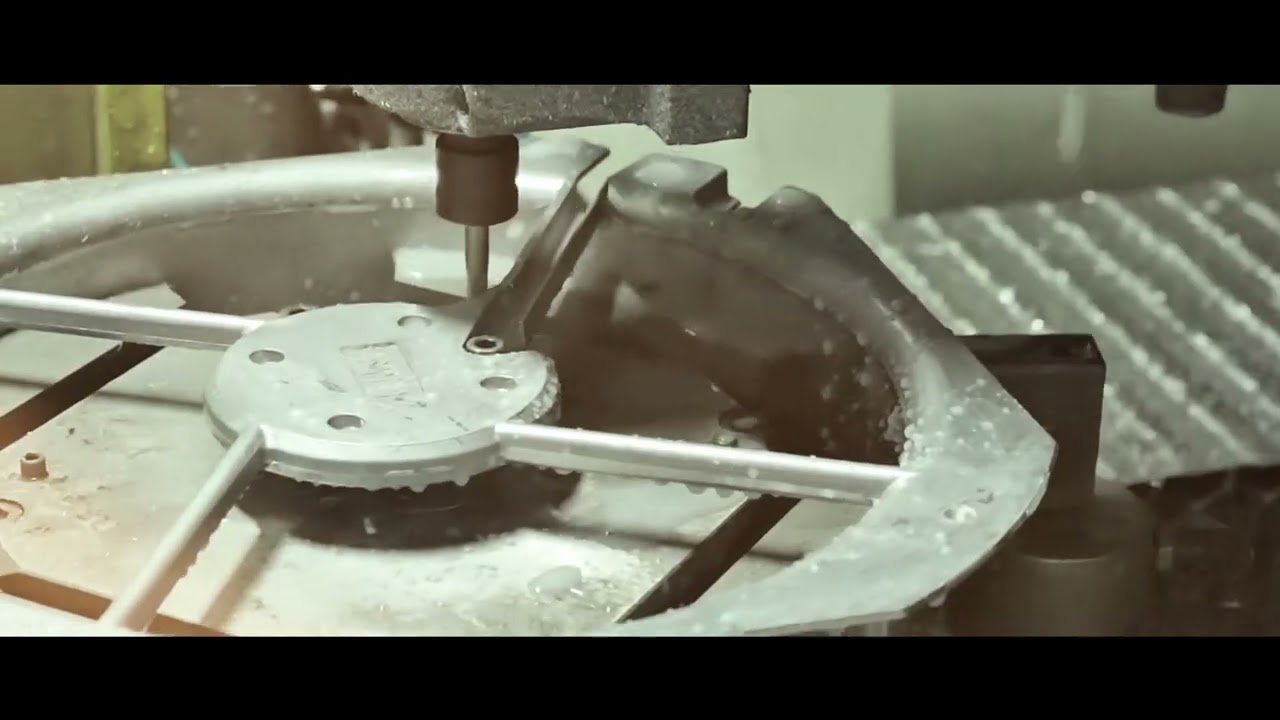
We control the upstream stages most buyers can’t verify from a spec sheet alone. Each one closes off a specific purchasing risk:


- 01
Motor winding, in-house
Removes the batch-to-batch variation that comes with sourcing motor assemblies from a third-party supplier.
- 02
Impeller molds, self-owned
The same tooling builds your prototype sample and your production run, so there’s no retooling step between sample approval and mass production to introduce drift.
- 03
Aluminum housing die-casting, in-house
A design change on your side doesn’t have to wait on an external supplier’s tooling queue.
- 04
Rotor/impeller balancing to G2.5 standard, G1 available at a cost premium
Reduces rejection risk on vibration-sensitive installations.
- 05
Aging and insulation testing on our own benches, not sent out
Catches early electrical failure before a unit ships, not after it’s installed.
- 06
100% outgoing inspection, not a statistical sample
Removes the shipment-level uncertainty that comes with sampled QC.
By controlling winding, impeller tooling, die-casting, balancing and final inspection in-house, we help reduce variation between prototype samples and production batches.
CE certified across the full AC, DC and EC range. All three lines are manufactured in the same ISO 9001-certified facility. For OEM buyers shipping into markets with these requirements, certification status gets confirmed at the engineering review stage, before tooling is committed, so it’s never a surprise late in the order.
Expand full compliance detail
Effective 24 July 2026, the EU’s Ecodesign Regulation (EU) 2024/1834 (“ErP 2026”) sets Tier 1 efficiency requirements for fans with motor input power between 125W and 500kW, replacing the earlier Regulation (EU) No 327/2011. Read the regulation →
200+ OEM clients across 25+ countries. Engineering review within 1 business day. Prototype samples for select standard models typically available in 3–7 days, with full performance data. That timeline holds for standard sizes already in the catalog; fully custom frame sizes or motor windings go through a separate quote for tooling lead time, discussed at the engineering review stage.
- 1
Engineering Review
Send specs: voltage, frame size, airflow, static pressure, IP rating and certifications. Response within 1 business day.
- 2
Sample Production
Prototype samples built and tested in-house. Full performance data sheet included.
- 3
Approval & Tooling
Sample approved, tooling locked in, private label and packaging finalized.
- 4
Mass Production & Delivery
Full production with 100% factory QC before shipping. Sea freight, air freight or express courier available.
Not sure what to check beyond this page? See our 5-question framework for evaluating any centrifugal fan manufacturer — test data, motor range, IP options, and how they handle a bad batch.
What Drives Your Quote
We don’t publish fixed pricing, since too many variables affect the real number. Here’s what actually moves it, so you know what to have ready before you ask.
| Driver | What it changes | What to prepare |
|---|---|---|
| 01Quantity & Frequency | Recurring or bulk orders lock in pricing stability and predictable lead times. One customer’s 5-model batch order kept pricing unchanged across the run, with a lead time given as an honest number rather than a vague promise. | annual volume, batch size, and whether orders repeat on a schedule. |
| 02Customization | Private label, custom specs and packaging all add lead time for tooling and label-file coordination. Flag customization needs at the engineering review stage, not after. | label file, target spec sheet, and packaging requirement. |
| 03Logistics & Packing | Freight cost depends on real box dimensions and weight, not estimates. A single spare-parts unit can run roughly 21kg and 52×52×33cm, depending on frame size and packaging. | destination country, delivery method, and quantity per shipment. |
Bringing these three to the engineering review stage, rather than after a quote has already been issued, is what keeps the number you get close to the number you end up paying.
Get a QuoteRequest a Centrifugal Fan Quote
Send the details below and our engineers will review them before quoting — we reply within 1 business day.
- Frame or impeller size — or the model of the fan you’re replacing
- Voltage and motor type (AC, DC or EC)
- Airflow requirement and static pressure
- Quantity
- IP rating and operating temperature
- Drawing or datasheet of the fan you’re replacing (if any)
Prefer email or WhatsApp?
Email: andy@proventofan.com · WhatsApp: +86 15057523756
Frequently Asked Questions
What is a centrifugal fan?
What is the difference between a centrifugal fan and a regular fan?
What is one disadvantage of centrifugal fans?
What is another name for a centrifugal fan?
How does a centrifugal fan work?
What are the different types of centrifugal fans?
What are the applications of centrifugal fans?
Centrifugal Fan Guides & Resources
- ComparisonAxial Fan vs Centrifugal Fan: How to Choose
- Guide5 Types of Centrifugal Fans Explained
- ComparisonBackward Curved vs Forward Curved Centrifugal Fans
- ApplicationCentrifugal Fan for HVAC: Selection & Performance Guide
- GuideBackward Curved Centrifugal Fan: Efficiency & Applications
- GuideForward Curved Centrifugal Fan: Design & Use Cases
- ApplicationCentrifugal Exhaust Fan: Applications & Selection
- GuideInline Centrifugal Fan: Applications, Advantages & Selection
- GuideCentrifugal Fan Manufacturer: EC, AC & DC Models
- GuideWhat Is a Radial Fan?
- GuideWhat Is an Airfoil Fan?
- GuideWhat Is a Squirrel Cage Fan?
- GuideWhat Is a Plenum Fan?
- GuideHigh Pressure Centrifugal Blower: Applications & Buying Guide